
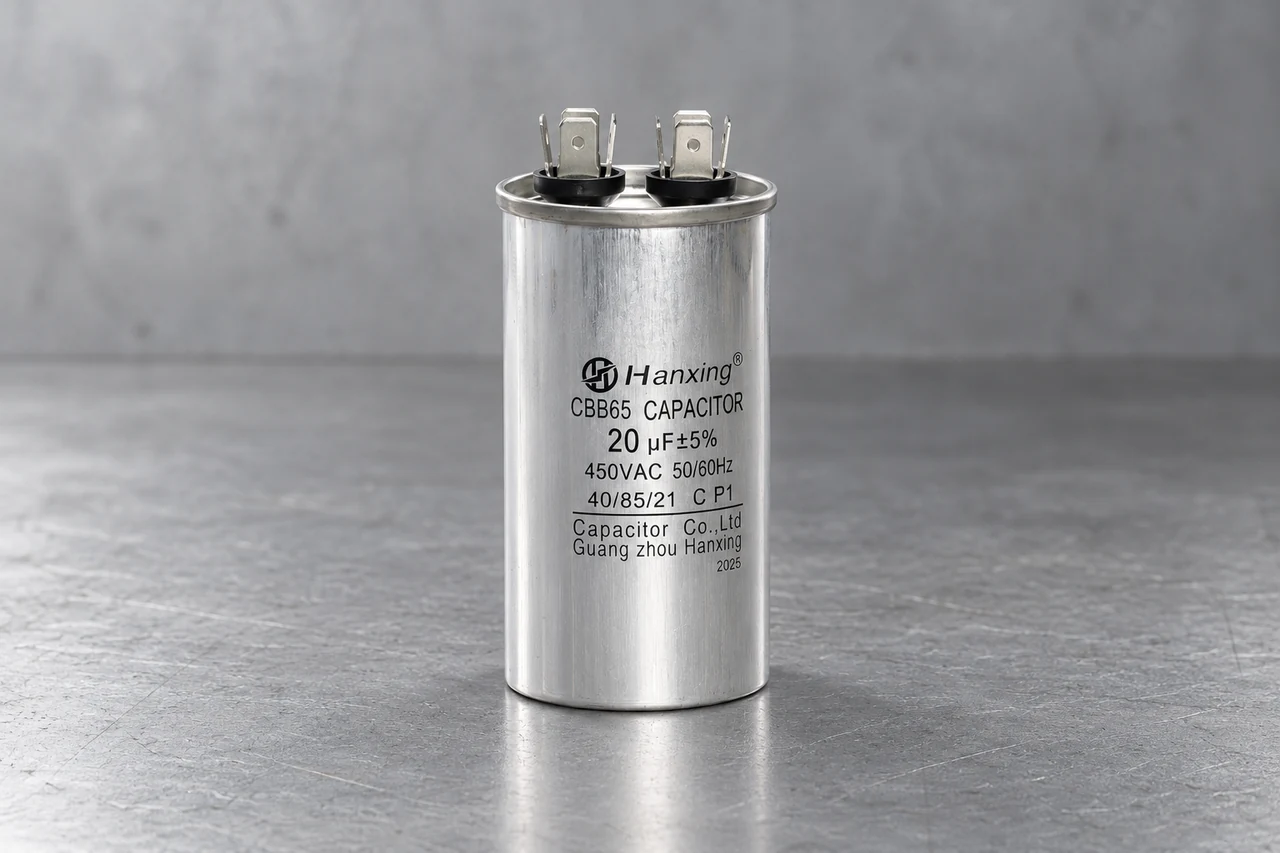
A motor that hums, starts poorly or overheats can have a capacitor fault, but the same symptoms can come from supply, wiring, a mechanical load or a starting-switch problem. Diagnose the circuit and measure the isolated capacitor before deciding which part needs replacement.
A symptom narrows the investigation
A weak run capacitor can affect auxiliary-winding current, torque and heating. A loose terminal or an incorrect connection can interrupt the same circuit. Supply problems or mechanical drag can prevent acceleration even when the capacitor is within its marked capacitance band. Oriental Motor: AC motor troubleshooting
For a heat pump or air conditioner, separate the compressor circuit from the fan circuit. One complaint can involve either motor, its controls or its capacitor section. Preserve the OEM part reference and wiring diagram during diagnosis; a generic HVAC capacitor cross-reference does not identify the failed circuit.
Visible damage is a reason to stop using the part
Bulging, leakage, a cracked case or damaged terminals calls for the component to be removed from service and the cause investigated. A case that looks normal can still contain a faulty capacitor. Visual inspection therefore helps identify damage but cannot establish electrical condition on its own.
A qualified technician isolates the equipment, follows the approved discharge procedure and measures the disconnected component. A low capacitance result is compared with the nominal tolerance and measurement conditions. Open-circuit and short-circuit diagnoses need an appropriate method; a single OL or zero display in an unspecified meter mode is inconclusive.
If a start capacitor fails again, investigate disconnection
A start capacitor helps produce torque during acceleration and must leave the circuit after the specified interval. A defective switch or relay can keep it energized. A stalled load or repeated automatic retries can also extend the starting duty beyond the intended pattern. Fitting another capacitor without resolving that condition can leave the cause in place.
Record the maximum on-time, shortest rest and actual restart sequence against the selected model’s limits. Neither a higher voltage label nor more µF makes an intermittent-duty component suitable for permanent connection.
Order from the diagnosed motor requirement
Keep the original nominal µF, required VAC, duty and connection assignment with the approved replacement. On a dual-run HVAC part, retain both section values. Record the equipment model and any diagnosed switching or wiring fault alongside the replacement reference so future orders do not repeat an incorrect substitution.
Identify the replacement after diagnosis
Send the original label, motor model and the required duty and fit. Describe any established fault separately from the replacement rating.